
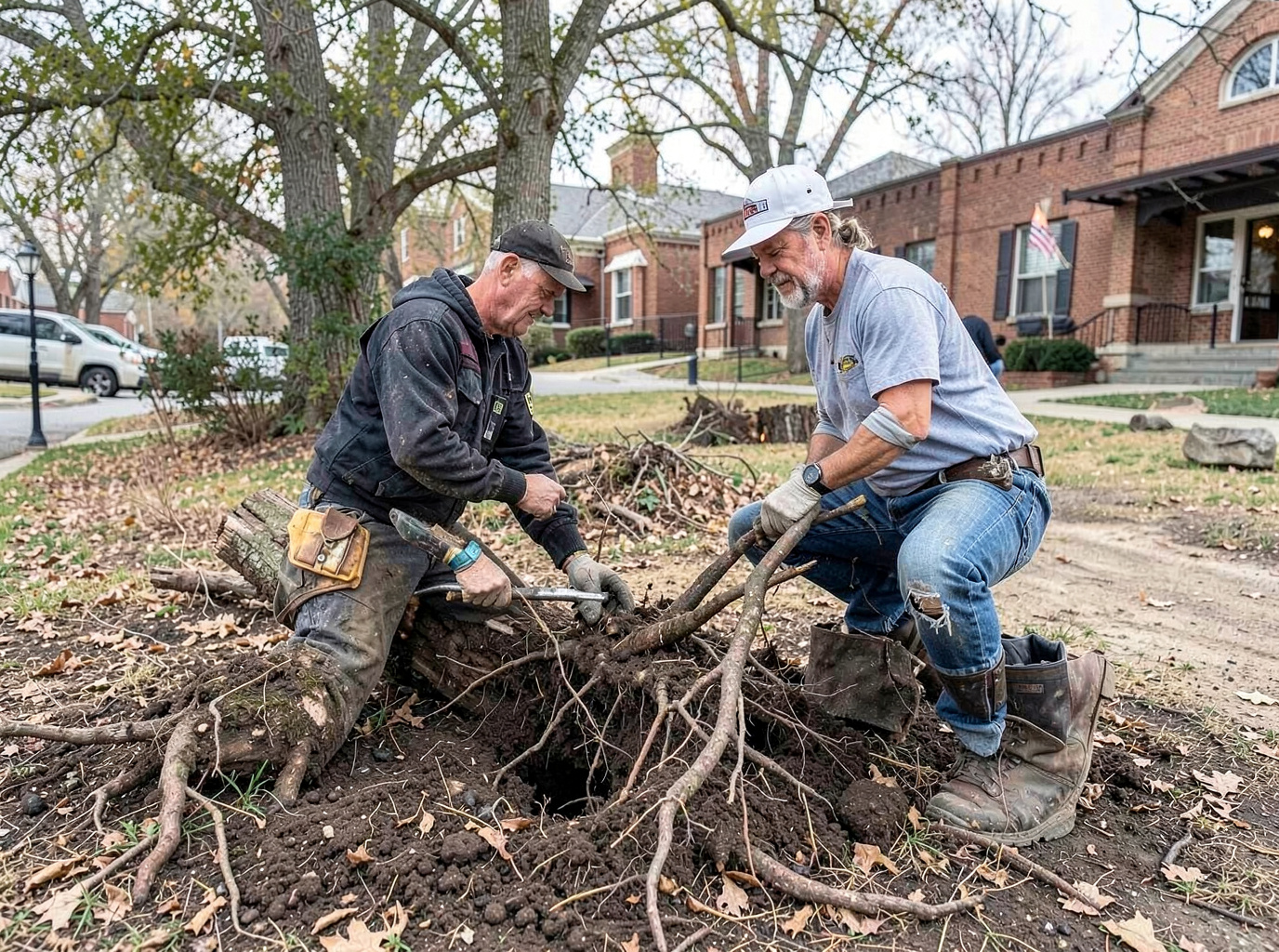
Fayetteville's humid subtropical climate keeps tree roots active through mild winters, sending them toward moisture in sewer lines under older homes in South Fayetteville and around the University of Arkansas campus. Mature oaks and maples common near Wilson Park and Mount Sequoyah drive roots into joints of clay or cast-iron pipes that have settled over decades. Hydro jetting combined with mechanical cutting reaches these intrusions without digging up driveways or yards in tight Dickson Street lots.
Washington County soil mixes of clay and rock shift with seasonal rains, creating small gaps that roots exploit faster than in newer subdivisions around Rogers or Bentonville. Camera inspection first maps the exact intrusion point so crews avoid blind augering that can push roots deeper. Once cleared, a root inhibitor is applied to slow regrowth, especially useful on properties with large trees close to the main line.
Homeowners in Razorback Park or Downtown Fayetteville often mistake slow drains for simple clogs when roots have already wrapped the pipe. Early intervention prevents full line collapse that requires trenching through established landscaping. Service calls start at the 1147 S Mally Wagnon Rd shop and reach most Fayetteville addresses within the same day during Mon–Fri 8am–6pm or Sat 9am–2pm hours.
Technician insight
In Fayetteville, the thing that catches most people out with Tree Root Removal is how the clay soils around Mount Sequoyah and Wilson Park shift enough each winter to reopen small pipe joints that roots find immediately. Homeowners near the University of Arkansas campus often wait until a full backup hits instead of scheduling a camera check when drains first slow after heavy summer rains.
Root Blockage Near Wilson Park
A South Fayetteville homeowner reported repeated slow drains after spring rains. Camera inspection showed roots from a large oak entering a clay line joint. Mechanical cutting and jetting restored flow, followed by inhibitor treatment to protect the line running under the yard.
Tree Root Removal Services We Offer
✓Camera Inspection for Root Intrusion
Locates exact root entry points in lines serving homes near Wilson Park or the University of Arkansas campus before any cutting begins.
✓Mechanical Root Cutting
Uses powered blades to slice through root masses inside sewer lines common in older South Fayetteville properties without disturbing surface landscaping.
✓Hydro Jetting for Root Removal
High-pressure water clears residual root debris and flushes lines after cutting, effective on clay soils around Mount Sequoyah.
✓Root Inhibitor Treatment
Applies EPA-approved foam or liquid that discourages new root growth in lines running through yards with mature trees near Dickson Street.
✓Emergency Root Blockage Service
Same-day response for complete backups affecting Washington County homes where roots have fully obstructed the main sewer.
Tree Root Removal Cost in AR
| Service | Typical Range | What Affects It |
|---|---|---|
| Camera Inspection And Root Cutting | $250–$450 | Varies with line length and whether multiple access points are required |
| Hydro Jetting Add-On | $150–$300 | Added when heavy debris remains after cutting |
| Root Inhibitor Treatment | $100–$200 | Applied during same visit on most Washington County jobs |
| Full Line Assessment With Minor Repair | $400–$750 | Covers cases where roots have damaged joints near older homes |
Ranges are typical for AR and confirmed with an exact written quote before any work starts.
How it works
- 1
Initial Assessment
Technician reviews access points and runs a camera from the cleanout to map root locations in lines serving Fayetteville neighborhoods.
- 2
Root Cutting
Powered cutter is fed through the line to slice roots at the intrusion point while protecting pipe walls in older Washington County homes.
- 3
Jetting And Flushing
High-pressure water removes debris and verifies flow before any inhibitor is introduced.
- 4
Inhibitor Application
Foam treatment coats the line interior to slow future root regrowth from nearby trees.
Pricing
Most Fayetteville tree root jobs fall in the mid-hundreds; final cost depends on line depth, access, and whether replacement is needed.