
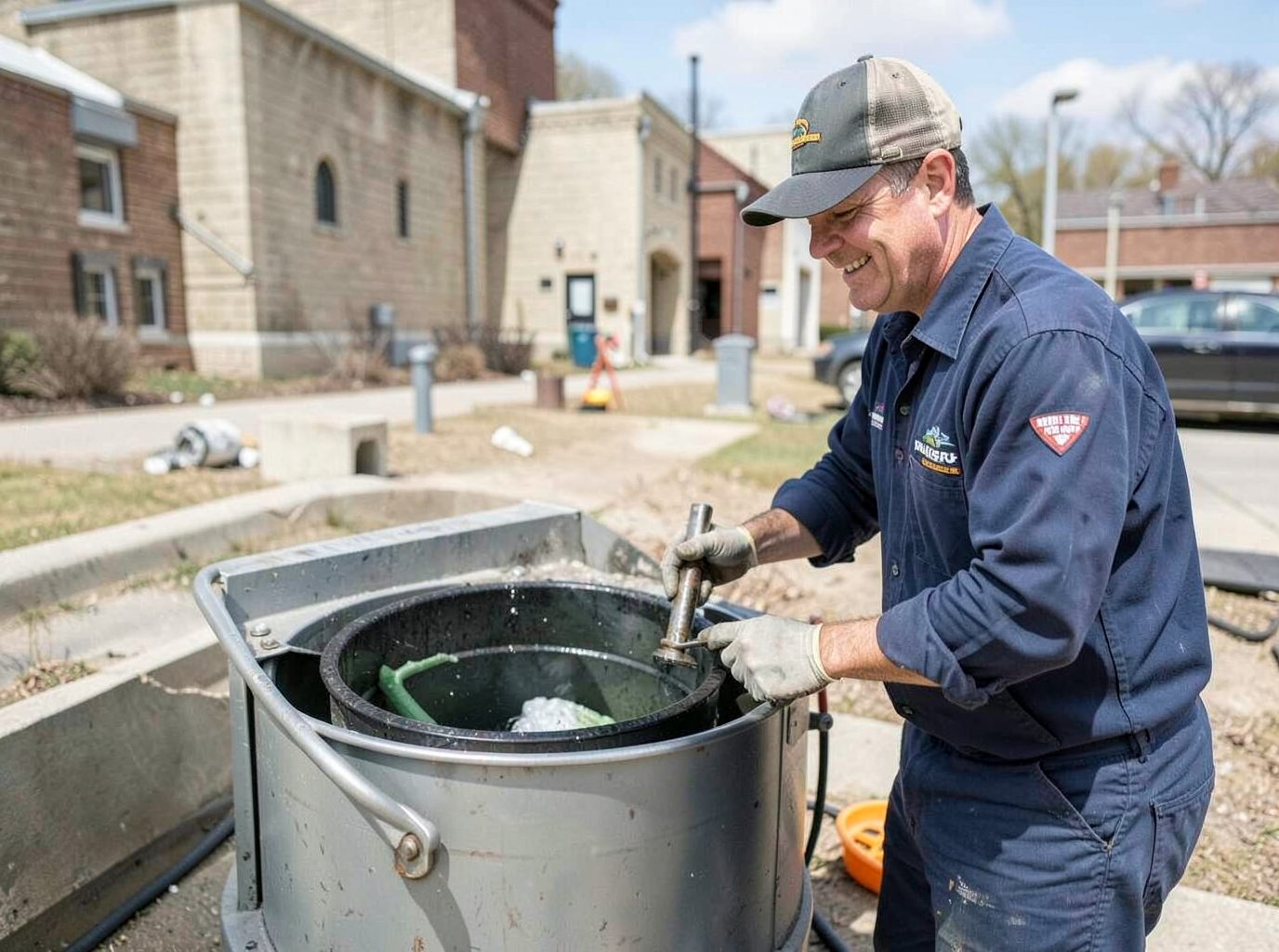
Fayetteville's humid subtropical climate drives faster grease solidification in summer months when kitchen lines run hotter and FOG waste thickens quickly. Older housing stock around Wilson Park and Mount Sequoyah often features narrow cast-iron laterals that trap solids faster than newer builds near Razorback Park. Commercial kitchens near the University of Arkansas campus see heavier loads from student traffic and events at Walton Arts Center, requiring more frequent pumping to stay within city discharge rules.
Clay-heavy soils common in South Fayetteville and along the slopes of Mount Sequoyah shift with seasonal moisture, stressing buried trap connections and creating leaks that go unnoticed until backups reach the main line. Restaurants in Downtown Fayetteville and on Dickson Street must maintain records of cleanings to satisfy health inspections, and missed intervals lead to odor complaints that travel quickly in dense blocks. Technicians here routinely check for root intrusion where lines pass near mature trees in Wilson Park yards before sealing the trap lid.
Access points in many Fayetteville homes sit under driveways or patios added after the original build, so crews plan extra time for excavation and restoration. Service extends to nearby Springdale, Rogers, and Bentonville when lines tie into shared Washington County infrastructure. Proper disposal at approved facilities prevents illegal dumping fines that local operators have seen hit both property owners and contractors.
Technician insight
In Fayetteville, the thing that catches most people out with Grease Trap Cleaning is how clay soil around Wilson Park and Mount Sequoyah shifts after heavy rains and pinches older cast-iron lines, turning a simple pump job into a repair once the trap is empty and flow is tested.
Dickson Street Restaurant Backup
A kitchen on Dickson Street reported slow drains during peak summer traffic. Inspection showed the trap packed with solidified grease from daily high-volume cooking. Crew pumped the unit, jetted the downstream line past a minor root intrusion, and restored full flow before lunch service.
Grease Trap Cleaning Services We Offer
✓Commercial Kitchen Grease Trap Pumping
Scheduled removal of accumulated FOG and solids from restaurant interceptors to prevent backups into kitchen drains near high-traffic spots like Dickson Street.
✓Residential Grease Interceptor Cleaning
Thorough pumping and interior scraping of home grease traps in older neighborhoods such as Wilson Park where narrow lines and tree roots increase clog risk.
✓Kitchen Drain Line Jetting
High-pressure flushing of downstream lines after trap service to clear residual grease pushed into laterals serving University of Arkansas area rentals.
✓FOG Compliance Inspection
Documentation and visual check of trap condition for Fayetteville restaurants needing records ahead of health department visits around the Walton Arts Center district.
✓Emergency Grease Trap Service
Same-day response for overflowing traps in South Fayetteville and Mount Sequoyah homes when heavy summer cooking creates sudden blockages.
Grease Trap Cleaning Cost in AR
| Service | Typical Range | What Affects It |
|---|---|---|
| Standard Residential Trap Pumping | $250–$450 | Size and driveway access in older Fayetteville neighborhoods affect final cost |
| Commercial Kitchen Service | $400–$750 | Volume from restaurants near the University campus and Dickson Street drives frequency |
| Add-On Line Jetting | $150–$300 | Required when grease has migrated past the trap into clay soil areas |
| Emergency After-Hours Call | $150–$250 | Added to base service for Saturday or late-day responses |
Ranges are typical for AR and confirmed with an exact written quote before any work starts.
How it works
- 1
Site Assessment
Technician locates the trap, measures access, and checks downstream lines for root or soil issues common in Washington County clay.
- 2
Pumping and Solids Removal
Full evacuation of grease, water, and debris into sealed truck tanks for transport to approved disposal sites.
- 3
Interior Cleaning and Rinse
High-pressure wash of trap walls and baffles followed by line jetting to restore flow before reinstalling the lid.
- 4
Final Check and Advice
Verify proper operation, note any needed repairs, and provide interval recommendations based on kitchen volume.
Pricing
Rates depend on trap size, access difficulty, and whether line jetting is required; call for a same-day quote.